
Why American Li-ion is Leading the Circular Economy Revolution
The future of American energy independence isn’t being written in boardrooms or legislative chambers alone—it’s being forged in a groundbreaking facility in Atoka, Oklahoma, where American Li-ion is transforming what was once considered waste into the strategic foundation of tomorrow’s battery supply chain.
As trade tensions with China expose critical vulnerabilities in America’s rare earth and battery material supply chains, American Li-ion stands at the forefront of a revolution that proves recycling isn’t just environmental responsibility—it’s economic sovereignty, national security, and the embodiment of American innovation at its finest.
Pioneering Technology That Changes Everything
At the heart of American Li-ion’s vision lies a simple but powerful premise: the materials we need to power America’s future already exist within the batteries we’ve already made. The challenge has never been scarcity—it’s been the absence of domestic infrastructure to reclaim, refine, and reintegrate these critical minerals back into American manufacturing.
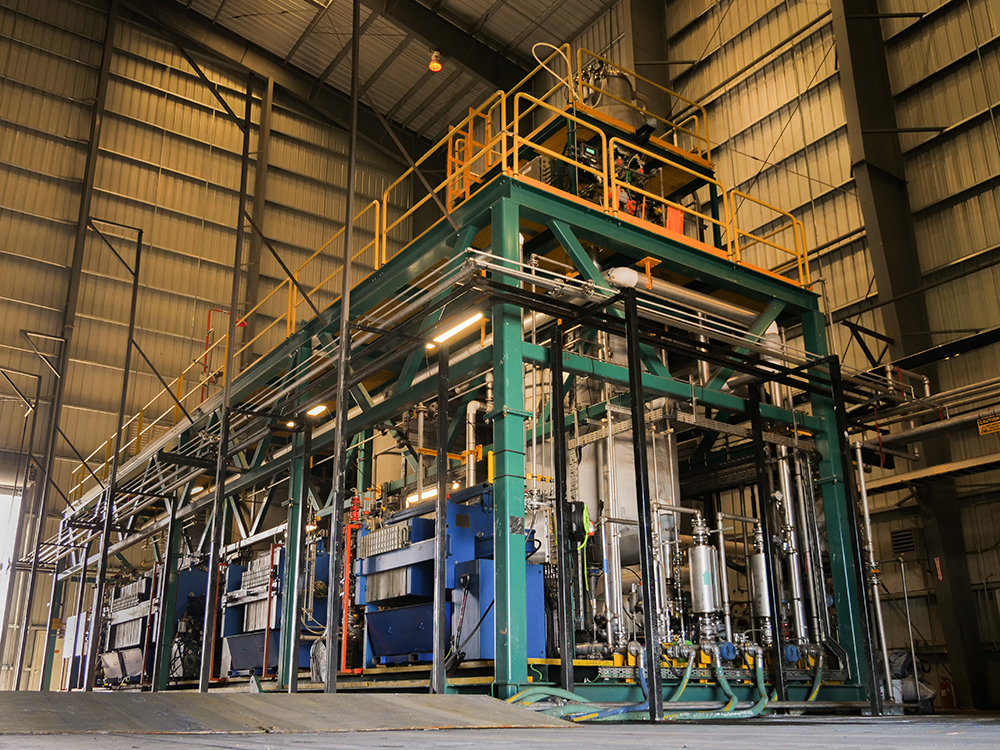
That’s exactly what the Atoka facility accomplishes. As North America’s first commercial-scale plant capable of processing unsorted black mass into ninety-nine percent pure precursor cathode active material, this isn’t just another recycling operation. It’s a complete reimagining of how battery materials flow through the economy. Where traditional approaches required shipping materials overseas—often to the very countries creating supply chain instability—American Li-ion closes the loop entirely on American soil.
The numbers tell a compelling story. The facility processes enough material daily to power seventy-two thousand smartphone batteries, with plans to quadruple that capacity. But more impressive than the volume is the speed and purity. Using patented Green Hydrorejuvenation technology, American Li-ion converts recycled battery waste into battery-grade cathode materials in approximately twelve hours—a process that traditionally took weeks and required international shipping to complete.
From Vulnerability to Strategic Advantage
The recent escalation in trade tensions has laid bare an uncomfortable truth: America’s dependence on foreign sources for battery materials represents both an economic liability and a national security concern. When a single nation controls ninety-two percent of global rare earth processing and can restrict exports at will, every electric vehicle, defense system, and renewable energy project becomes vulnerable to geopolitical disruption.
American Li-ion’s circular economy approach transforms this vulnerability into advantage. By recovering lithium, cobalt, nickel, and manganese from end-of-life batteries, the company creates a domestic source of critical minerals that’s immune to trade wars, export restrictions, and foreign policy complications. These aren’t just recycled materials—they’re strategic reserves that grow more valuable with every battery that reaches end-of-life.
The implications extend far beyond avoiding supply disruptions. When American manufacturers can source battery-grade materials from Atoka rather than Shanghai, they’re not just securing their supply chains—they’re building cost predictability, reducing transportation emissions by up to ninety percent, and ensuring that American dollars stay in American communities. This is what energy independence looks like in practice.
Building the Circular Economy Ecosystem
What sets American Li-ion apart isn’t just technological capability—it’s the vision of creating an entire ecosystem where battery materials cycle continuously through production, use, and renewal. The Atoka facility represents the critical missing link that North American battery recycling has always lacked: the ability to process diverse battery chemistries at commercial scale without requiring overseas refinement.
This capability cascades through the supply chain in powerful ways. Original equipment manufacturers can design products knowing that end-of-life materials will return as battery-grade inputs. Battery recyclers and manufacturers can either send black mass to American Li-ion for processing or license the technology for their own facilities, creating a flexible network that scales with growing electric vehicle adoption. Consumers can charge their devices and drive their electric vehicles knowing they’re participating in a truly circular system where materials never leave the productive economy.
The modular nature of American Li-ion’s technology means this vision scales rapidly. Rather than requiring years of construction and permitting for each new facility, the processing systems can be deployed within months—keeping pace with the explosive growth in battery retirements projected over the next decade. As electric vehicle adoption accelerates, American Li-ion’s infrastructure grows in lockstep.
Creating Jobs and Strengthening Communities
The circular economy revolution isn’t just about materials and supply chains—it’s about people and places. American Li-ion’s investment in Atoka represents a commitment to rural American communities that have too often been left behind in conversations about advanced manufacturing and clean energy jobs.
The facility has created high-quality employment opportunities in manufacturing, engineering, and technology—skilled positions that offer career pathways and competitive wages. These aren’t temporary construction jobs; they’re permanent roles in an industry positioned for decades of growth. As battery retirements increase exponentially through the 2030s and beyond, the workforce supporting this circular economy will grow proportionally.
Beyond direct employment, American Li-ion’s presence strengthens the entire local economy. Partnerships with nearby suppliers, collaboration with educational institutions to develop talent pipelines, and the multiplier effects of well-paid workers spending in their communities create ripples far beyond the facility gates. This is economic revitalization driven by innovation—showing that advanced manufacturing and rural America aren’t contradictions but complementary strengths.
The Environmental and Security Imperatives
While economic arguments for battery recycling are compelling, the environmental and security cases are equally urgent. Traditional lithium mining requires approximately five hundred thousand gallons of water per ton of lithium produced, often in water-scarce regions facing ecological stress. Cobalt mining raises persistent ethical concerns about labor practices. These environmental and social costs compound when geopolitical competitors control mining and refining capacity.
Recycling dramatically reduces these impacts. American Li-ion’s hydrometallurgical processes cut greenhouse gas emissions by up to ninety percent compared to virgin material production. Water consumption drops precipitously. Most importantly, the entire process operates under American environmental and labor standards—ensuring that the clean energy transition truly embodies the values it claims to advance.
From a national security perspective, the ability to domestically source battery materials removes leverage points that adversaries might exploit. Defense systems rely on the same lithium-ion technologies powering consumer electronics and electric vehicles. When those materials flow through American Li-ion’s circular system rather than foreign-controlled supply chains, the entire defense-industrial base becomes more resilient. Energy security and national security prove inseparable.
Vision for the Future
American Li-ion’s leadership in circular economy battery recycling represents more than business success—it’s a proof of concept for how American innovation solves twenty-first century challenges. The trade tensions dominating today’s headlines will eventually resolve, but the structural need for secure, sustainable, domestic sources of critical minerals will only intensify as electrification accelerates.
The Atoka facility demonstrates that America need not choose between environmental sustainability and economic competitiveness, between national security and global trade, between rural communities and advanced technology. The circular economy transcends these false dichotomies by creating systems where economic value, environmental stewardship, and strategic resilience reinforce each other.
As battery recycling capacity expands—with American Li-ion’s technology deployed across multiple sites and licensed to partners throughout North America—the vision of true materials independence comes into focus. A future where lithium, cobalt, nickel, and manganese cycle endlessly through American supply chains. Where end-of-life batteries represent valuable resources rather than waste streams. Where communities like Atoka anchor a manufacturing renaissance built on sustainability and security.
This is the circular economy revolution, and American Li-ion is showing the way forward—transforming yesterday’s batteries into tomorrow’s energy independence, one cycle at a time.


